Demographic Bubbles, Shrinking household sizes And Student Loan Debt - Oh My!
Another effort to explore the causes behind the American housing affordability crisis. It's deeper than most everyone thinks.

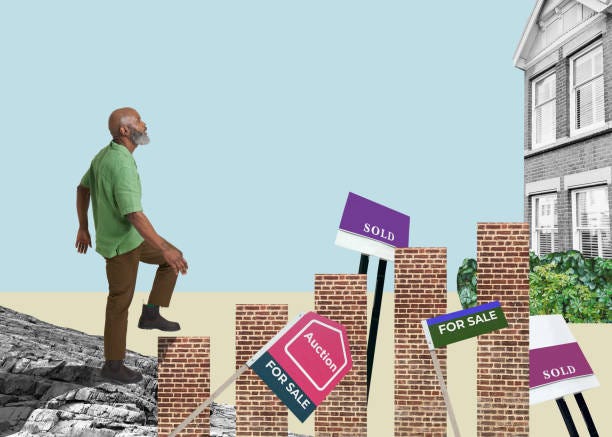
Source: gettyimages.com
Anyone who writes on urbanism issues had better write about the American housing crisis. It’s completely changed the tenor of the discourse on our metropolitan areas; it drowns most everything else out.
Most often housing crisis pieces are framed around ways to increase housing production and increasing awareness about the need for a variety of housing types in all communities. That’s all well and good. But I still think most Americans – and really, even most urbanists – don’t fully understand the factors that created our current condition. I think most people understand it as the outcome of a housing industry not supplying the housing that our population demands, and then quickly move on to devising ways to increase housing production.
I’m a big believer in the view that understanding and gaining consensus on why a problem occurred, is necessary for developing the appropriate policy strategies to fix them. Nearly two years ago, I published a post I called The Real Reason For America’s Housing Crisis. In it, I said that a huge, often-unacknowledged factor in the housing crisis:
“The nature of housing demand has changed significantly in the last half century. The national shrinking of the typical household size means demand has dropped dramatically since the peak Baby Boom years of the late 1950s and early 1960s. Average household size in the U.S. in 1960 was 3.38 persons. By 2023 that number fell to 2.55 – a 25% drop. With smaller household sizes, the demand for housing has increased relative to our overall population gains. This has led to a two-fold problem: 1) the housing industry has continued building the kinds of large single-family homes that were most in demand for decades, and 2) the housing industry has been late to respond to rising demand for multifamily rental properties (which lagged in construction until the last 3-5 years or so). They’ve begun to fill the void but haven’t yet succeeded.”
Based on the response from subscribers and readers, that post resonated. It became the second-most popular article in the 2+ years I’ve been writing on Substack.
But I’m here to add more to that conversation, and see how you respond.This post actually started as a comment to another Substack, The Sapiens Project by Alan Mallach. If you haven’t seen his work or heard his name, I highly encourage you to check out his Substack as well as his many books. He’s a retired city planner, perhaps most famously as the housing and economic development director for Trenton, NJ. He’s written a lot about social and economic inequality in American metro areas, and the unique challenges and opportunities for so-called “legacy cities”. Two books of his, Rebuilding America’s Legacy Cities: New Directions for the Industrial Heartland (2012), and The Divided City: Poverty and Prosperity in Urban America (2018), I definitely recommend to those who want to understand more of what I generally cover here.
Last week, Alan kicked off a series on the U.S. housing affordability crisis. He started by discussing the rising number of young adults delaying cohabitation and marriage, and living with parents, as a contributing factor. That’s a fair point. But one point he doesn’t seem to account for is the amount of college student loan debt that many college grads bring to their adult lives. Entering the workforce with a six-figure debt load can certainly diminish your housing choices.
Part 2 of his series was posted yesterday. He makes the claim that low-income persons have dealt with a housing crisis for decades, but housing unaffordability didn’t become a major national political concern until the last 10-15 years, when the percentage of cost-burdened and severely cost-burdened renters rose steadily between 1960-2010, yet has been steady since.
Later on, he says that “the crisis is the product of a structural, or systemic, gap between what it costs to provide rental housing, and what low-wage workers in the United States earn” is spot on. This has been the case for decades, accelerating (IMO) since the 1980’s.
I wholeheartedly agree. That was something I recognized during the Covid pandemic, when I realized “essential workers” were given lots of gratitude, but not an increase in pay. Later I said that the next American middle class already exists, it just hasn’t been treated like it.
But I have a different tack. Affordability has reached crisis levels among middle class households because of demographic changes and preference shifts in housing types. And we have a housing finance and development industry that can’t, or won’t, respond to the changing demand.
I’m not a YIMBY (or NIMBY), but this is where I see the YIMBY case. Over the last 40-50 years the U.S. has witnessed big changes in demographic composition: the rise of Millennials as the new largest age cohort; the appearance of Gen Z on the scene; the aging Boomers who are approaching and surpassing retirement age.
While these cohorts have found a place in America, they haven’t found the homes they desired because no one’s building them. Why? Because household sizes have been continually getting smaller since 1960 - 3.33 persons per household in 1960, 2.55 persons per household in 2020. There’s been a steadily rising demand for decades now for smaller housing types yet we still rely on a system that constructs mostly new expensive single-family homes, and filters other housing downward through middle- and low-income groups.
I see a housing demand/supply misalignment that’s getting worse. Boomers and Gen Xers like myself are catching flack because we have more housing than we need (widowed persons, empty nesters, etc.) but also an expectation for what we should receive for them. Millennial singles, couples and small families didn’t want what the Boomers and Xers had. Nor do Gen Zers, who continue the shift preference toward smaller households. They’re having fewer and fewer children.
I’m no finance expert by any means. But I do think the finance infrastructure that supports housing in the U.S. – the banks that fund residential development – has failed to adapt to the changing demographics and housing preferences. To me this was apparent in the leadup to the 2008 financial crisis, when lenders offered mortgages to millions of credit-risky households, only to see them collapse through foreclosure.
What immediately followed? An extended period of high levels of single-family home rentals across the country. The industry’s expectation was that the single-family home rental inventory would eventually recede, become owned properties again, and return to serving as the filtering fuel – the entry-level and mid-level housing that churns so luxury housing can be built. That’s where the industry makes its money.
But that hasn’t happened.
Much of the blame has been placed on NIMBY homeowners who want to “maintain the character” of their single-family home subdivisions, or on the zoning boards, plan commissions and city councils that have been reluctant to adapt their zoning to meet what buyers and renters really want but aren’t exactly saying. YIMBYs have been effective in getting state-level involvement in local zoning matters, especially as it relates to transit-oriented development. YIMBYs have been successful at ramping up the pressure on local governments through their statewide efforts.
There was a time in the 2010s when I thought that the young, educated professionals flocking to cities bore the brunt of this. I saw many of them showing a strong preference for urban living, in trendy neighborhoods with plenty of great rental units and amenities. My thinking immediately went to other neighborhoods that had the same character but missed out on the urban revitalization era. Those neighborhoods could be, I thought, a part of the solution. Proto-YIMBYs responded by saying more housing should be built in the most expensive areas. It would make housing more affordable for them as well. I took that as a disinterest in revitalization – or worse, being labeled a gentrifier.
But I don’t think the real resistance exists at the local level, or state level. The resistance exists in a financing industry committed to the housing development model that made it wealthy and has yet to find a new model as profitable as the old one.
This is a crisis that’s been decades in the making. It started among low-income households and filtered upward, just as the old filtering model took us from tenements to starter bungalows, to newer and more spacious ranch-style homes, then even newer McMansions. But what happens when student loan debt, demographic bubbles and declining household sizes interferes with a model that’s worked for 75 years? A crisis like we have today happens.
I’m beginning to think it’s a misalignment we long ignored when it hurt low-income households but became a crisis when the middle-class was impacted.
Thoroughly enjoy your writing particularly as a new resident of the Detroit area.
Kevin Eerdmann here on substack has been making the point about affordability in the bottom quintile being missing prior to 2008, and the problem spreading up through income brackets since the GFR.
His account of the GFR and housing price since then is worth engaging with - essentially, the panic about a supposed excess of housing led to restricting all but the highest credit score borrowers depressed home prices by excluding lower income brackets from home ownership, driving up rental cost. I think this dovetails possibly significantly with your observations on neighborhoods left behind by urban upswell.
Finally there are interesting and I think unanswered questions about what the current set of preferences are. IFS (I believe) has shown that fertility preferences remain stable among younger people (2-3 kids IIRC), but actual achieved family size is much smaller due to late or non existent marriage/partnering. I think this raises the question as to changing housing preferences - do people still desire SFH and it is unattainable? Do they genuinely desire family life in multi family but the stock is poor for family life (this is my experience)? Or are the surveys wrong and revealed preference is small/no family? And various other questions. I have hunches but I think these are open questions.
Finally, I wonder about hotel construction (or lack thereof), and the consequent effect on housing stock use for Airbnb or second homes. As a side note, I’ve puzzled over my unwillingness to stay at lower end motel chains (motel 6, red roof etc) that I found perfectly fine 15 years ago. Hedonic adaptation is a thing but I also wonder if housing shortages push people in precarious housing situations into those properties, and without any disparaging intent, bringing with them increased wear on the property. Certainly years ago I found them simple but reliably clean in most places but that is emphatically not my recent experience.
Not much to disagree with here but if there's a persistent multi-decade structural gap between what it costs to provide rental housing, and what low-wage workers in the United States earn, I'd like to better understand the causes on the wage side of the equation. I know this is an urban planning Substack not a labor economics one, and while the inadequacy of just building more new housing is well taken, at some point, one would expect upward pressure on wages. I read through the post linked to in this piece but it didn't seem like Mr. Mallach really addressed it. Perhaps he will in a future post.