Midwest Musings, #3
Waterfront revitalization in Omaha, Louisville and Milwaukee, a hot housing market in Buffalo, and more.
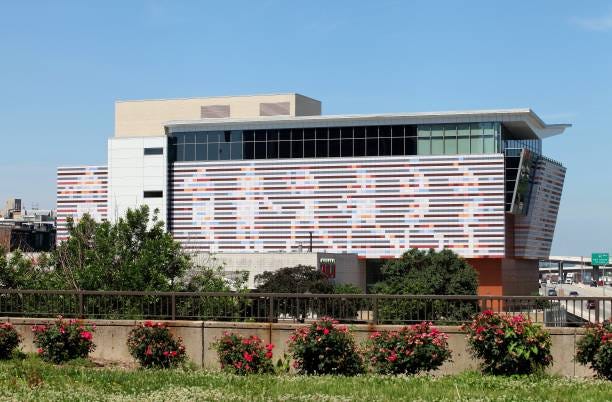
The Muhammad Ali Center in Louisville, KY. Located on Louisville’s Ohio River waterfront, it’s adjacent to the Belvedere site targeted for revitalization. Source: gettyimages.com
It’s been a little more than two months since I kicked off the Midwest Musings series. I’m picking it up again today to comment on urbanist happenings in the Midwest’s largest metros. Today I’m taking on the metros with between one and two million people (except for Milwaukee and Cincinnati, both of which are slightly above two million). Tomorrow I’ll post on the Midwest’s nine largest metros: Kansas City, Columbus, Indianapolis, Pittsburgh, St. Louis, Cleveland, the Twin Cities, Detroit and Chicago.
Here we go:
Omaha: The Kiewit Luminarium gets backlit perforated aluminum panels to feature the new science center located on Omaha’s Missouri River waterfront:
“Illuminated at night, the Kiewit Luminarium is a symbol of the revitalization of Omaha, Nebraska’s Missouri River waterfront. Inspired by the vernacular of midwestern machine sheds, HDR devised two staggered rectangular volumes for the institution which are clad in perforated aluminum panels and backlit at night.
The Kiewit Luminarium is sited within Lewis and Clark Landing, a long-neglected segment of Omaha’s riverfront adjacent to the city’s downtown. In recent years, the area has been revitalized with the addition of green space and recreational programs, replacing the large expanses of concrete that once defined the site.”
I am all for any Midwestern city that’s committed to revitalizing its waterfronts. Kudos to the Luminarium and the city for bringing beauty to former industrial areas.
Dayton: Dayton is using a $2 million grant to fund an urban tree inventory, tree canopy assessment, and urban forest master plan:
“Dayton's tree canopy covers less than a quarter of most neighborhoods. Some areas, including downtown and Midtown, have particularly low coverage at under 6%. As reported by Cornelius Frolik, the city has lost thousands of street trees in recent decades due to factors like the emerald ash borer infestation and severe storms, including the 2019 Memorial Day tornadoes.
Recognizing the benefits of urban forests in reducing pollution, lowering temperatures, and enhancing neighborhood aesthetics, the city is developing a comprehensive plan to expand and maintain its tree canopy. To guide its reforestation efforts, Dayton is using a $2 million federal grant to conduct an urban tree inventory, a tree canopy assessment, and develop an urban forest master plan. The assessment will document tree species, conditions, and maintenance needs while identifying potential planting sites. Some neighborhoods, like Germantown Meadows and Cornell Heights, already have over 40% tree cover, but others, such as Webster Station and Midtown, remain well below 10%. The city hopes to use this data to strategically target areas in need of more greenery and plan for long-term investments in tree maintenance.”
Rochester: A Buffalo writer takes a road trip to nearby Rochester, and is impressed by the city’s “Buy the Block” infill housing program:
“Buffalo’s affordable infill housing designs in recent years have been lackluster at best… the City and other affordable housing builders would be wise to look at what Rochester is building. The Rochester ‘Buy The Block’ program builds new single-family, high-quality homes in under-invested areas of the city. The homes are then sold to qualified first-time homebuyers who will spend no more than 30 percent of their income on housing.
Ten home designs are offered ranging from a 1,033 sq.ft. single-story plan with two bedrooms, one bath and no basement to a two-story, 1,729 sq.ft. plan with four bedrooms, two and a half baths and full basement.”
Buffalo: Meanwhile, Buffalo gets noted for its hot housing market. Zillow named Buffalo as its first repeat champion as the nation’s hottest housing market for 2025. However, Buffalo Rising notes it's hot in a Rust Belt sense:
“The data suggests that while there is modest job growth in the Buffalo area, new housing construction has not kept pace and has even declined in recent years. This disparity may contribute to increased demand in the housing market, potentially leading to higher property values and a more competitive market for homebuyers.
(W)hen it comes to “the hottest housing markets,” it’s not all about how many houses are selling, or what they’re selling for. Buffalo’s residential real estate market is still very hot, with not a lot of turnover. Housing prices continue to escalate, which is one of the reasons that people are remaining in place.”
Louisville: An architecture firm signs on to redevelop the Belvedere, a riverfront space on the Ohio River, into a reimagined public park:
“Heatherwick Studio has unveiled an ambitious vision to transform the Belvedere, a historic elevated riverfront space in downtown Louisville, Kentucky, into a reimagined public park in the United States. The project aims to breathe new life into the site, enhancing its connection to the Ohio River and creating a welcoming environment for both residents and visitors. Covering an area roughly the size of four football fields, the revitalized space will integrate seamlessly with the surrounding urban landscape, offering an inviting retreat in the heart of Louisville.”
My view here is similar to that in Omaha. Reclaiming waterfronts is a huge deal everywhere.
Grand Rapids: OK, it’s time to call out Michigan’s second largest city here. Where is the content on urbanism, planning and design issues in Grand Rapids? Back in December when I started the Midwest Musings series, I was only able to find a story about the completion of Grand Rapids’ comprehensive plan. This time around I’m able to find updates on road improvements, but nothing else.
Looks like Grand Rapids urbanists need to step up their game. Readers, if you know of good Grand Rapids urbanist websites, please let me know.
Milwaukee: Another story on waterfront revitalization, with this one singing the praises of Milwaukee's Lake Michigan shoreline. This story takes waterfront revitalization a step further, noting Milwaukee’s efforts to be a leader and innovator in freshwater technology:
“Milwaukee’s most stunning gem is its Lake Michigan shoreline — a great spot to picnic, sail, walk, bicycle and more. Economically, it’s a significant asset for Wisconsin’s largest city. “We’ve worked over the years to figure out how we get people closer to the water and bring development to areas adjacent to these public places,” says Leichtling. “Much of our economy is based on water. We’ve also planted a flag as being one of the capitals in the nation — possibly the world — for freshwater research and technology.”
I wish Milwaukee lots of luck in carving this kind of research for itself. I think it’s something all Great Lakes metros can take advantage of. When 20% of the world’s entire surface freshwater is located at your doorstep, it makes sense.
Cincinnati: A profile on Cincinnati Planning Commissioner Chair Byron Stallworth talks about his 10 years with the Commission, the last five as chair. He weighs in on development opportunities in Cincinnati’s Black communities, and on the restructuring of the local housing market:
“Cincinnati has seen impressive growth, especially in infrastructure, housing, and commercial development. But, I believe there’s still tremendous opportunity for further expansion, particularly within our African American communities. Cincinnati leads urban population in terms of growth in urban core in the state of Ohio…
Many buyers and renters prefer homes with low-maintenance designs, so we’re seeing small condo complexes in Madisonville, Oakley and Silverton. However, too many out-of-town investors have neglected their properties, leaving tenants in poor conditions. The Cincinnati Port Authority is working to address this issue by purchasing and renovating properties and educating renters on pathways to homeownership.


Grand Rapids resident here. Here is a great urbanist page written by my friend, Adam. It is updated weekly. It’s the most in-depth coverage of urbanist news in GR.
https://urbangr.org
There is also an active Strong Towns chapter.
https://www.strongtownsgr.org